Shut up and dance!
„The dog days are over 2.0“ von Jan Martens bei der Sommerszene Salzburg
By Miriam Stuefer
Maldonne: when cards have been mis-dealt in Poker and have to be reshuffled. The title of Leïla Ka’s performance, “Maldonne” refers to the mis-dealt chances between men and women, with the added misfortune that here the chances will not be reshuffled.
During the Austrian premiere this cast of five dancers (Justine Agador, Adèle Bonduelle, Océane Crouzier, Lise Messina, and Flore Ruiz) performed the piece for the last time before a new cast will take over. After continuing success and sold out shows since the premiere in 2023, Salzburg also received this performance with a standing ovation at the Sommerszene.
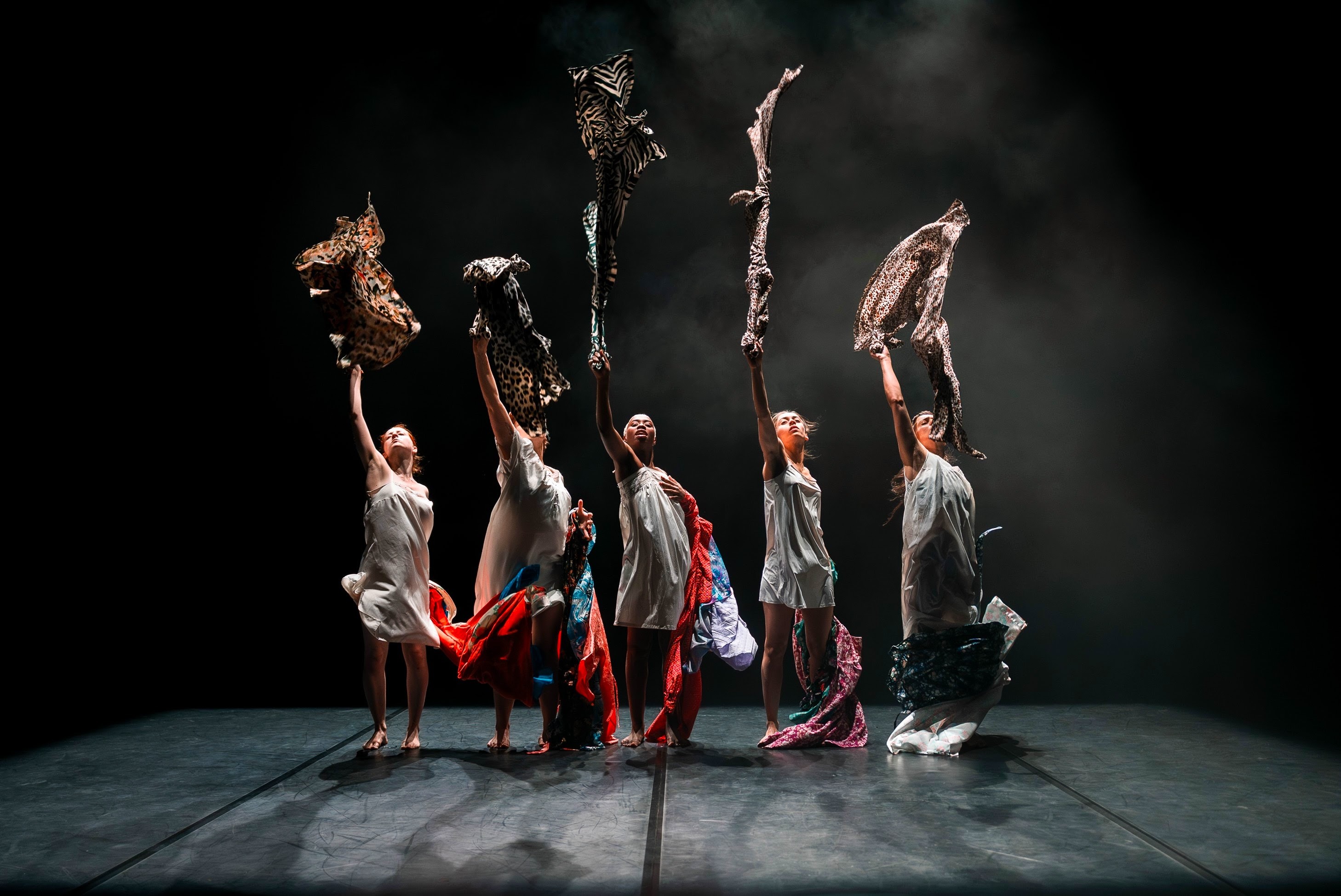
As the auditorium fills, a low bass is hardly audible which later swells up, filling the room as the lights go out. The sound abruptly stops, a square spot emerges and illuminates the five dancers standing in one line on stage, all looking down in slightly different angles.
It’s an evening of expectations connected to femininity. In stylised gestures a perceptively simple but very well thought through choreography emerges. It lays bare the expectations and stereotypes of womanhood: cleaner, carer, object, lesser sex, diva, and bitch fights. All of it is intermitted by moments of female solidarity and (contained) rage at the inequality. The repetitive movement language is the embodiment of (expected) womanhood.
Dresses as symbols
With flowery floor length dresses with puffed sleeves, the audience is exported back to the 19th century and the idea that women are the weaker sex and associated with hysteria. Wiping tears, holding hands to their heads as if fainting, falling to the floor and cleaning only underline this feeling. In a repetition of poses their sobs and breathing become the soundscape.
Even though all dancers wear the same style of dresses and all make the same movements, each dancer retains their individuality. The forty dresses, in which they change throughout the performance, were thrifted by Leïla Ka, always five of them in a similar style. Flowery dresses, black dresses, dressing gowns, long dresses, and short ones, with and without sleeves, with a print and once only in one colour. The huge variety of dresses and music takes the audience through many different times in history and a woman’s life.
Movements get new and different meanings as they are repeated and slightly altered in intention and context. An inability to change the situation at the start, makes way for pure rage that can be felt all the way through the auditorium, as sobs become screams and mechanic repetitions, aggressive scrubbing. As ‘feminine’ movements such as cleaning grow in intensity, they become a mechanical portrayal of male sexuality. These increasingly aggressive and animalistic movements erase the female experience.
Fight against patriarchy
Varying facial expressions, intensity and intention of the movements add to the individuality of each performer. Some dancers look as if they could smash the whole place with the dresses turned into dicks, guns, slings, headscarves, and (cleaning) rags, which they use to clean but also to hit the floor. Others just seem tired of the mis-dealt chances they are stuck in.
As the performance comes to an end the dancers, again, stand in the line as they did at the beginning. They wear layers upon layers of dresses which they slowly take off, shedding the expectations of their behaviour connected to these dresses and identities.
Noch keine Beiträge
basierend auf den Schlüsselwörtern
Bitte anmelden um Kommentare zu schreiben