Leitungswechsel
Katharina Christl übernimmt Leitung der Palucca Hochschule Dresden
By Natalia Cimpeanu
The summer and winter performances of the Bachelor Contemporary Dance students at Gessnerallee have become a fixture in Zurich’s dance calendar, offering a glimpse of the artists entering the contemporary dance profession. Directed by Samuel Würsten and Patricia Rotondaro, the programme is part of ZHdK’s dance education alongside the Tanz Akademie Zürich (taZ) and the Major Master Dance, led by Friederike Lampert, under Head of Dance Jason Beechey.
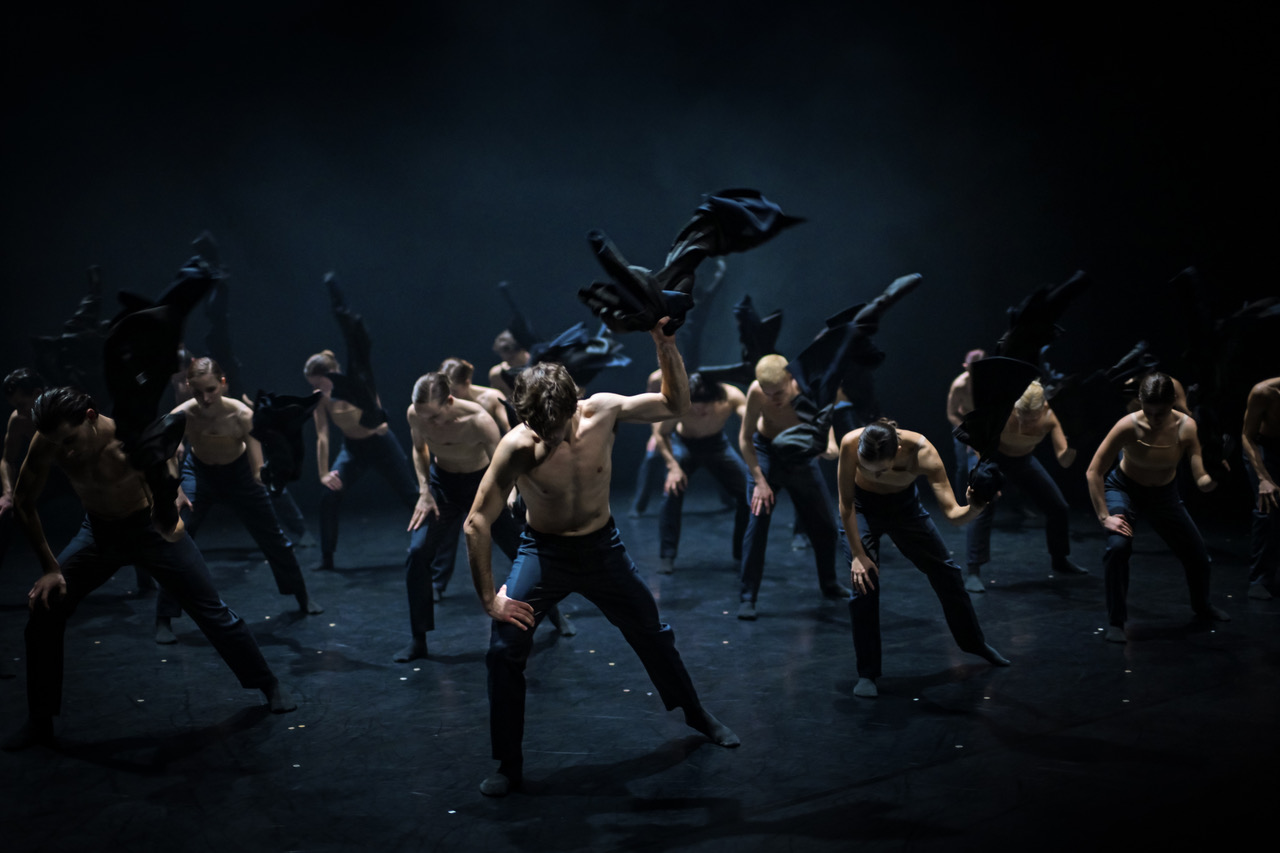
This year’s programme brought together first- and second-year students and demonstrated technical precision and artistic maturity. For the second-year students, the evening marked an important transition as they prepare to begin professional internships with dance companies next season. All 20 dancers have secured placements, reflecting the programme’s emphasis on preparing students for the professional dance context.
The programme brought together works by leading contemporary choreographers and included a new creation, exposing the dancers and audience to a wide range of choreographic styles. What stood out throughout the evening was the versatility of the dancers and their ability to move confidently between contrasting physical qualities, aesthetics and creative processes.
Curiosity and Openness
The evening opened with “Hypothetical Study”, created by Jill Johnson after William Forsythe’s “Hypothetical Stream”. Rather than reconstructing an existing work, Johnson introduced the first-year students to Forsythe’s choreographic practice through improvisational structures and compositional tasks. The dancers actively contributed to the creation of movement, combining technical skill with curiosity and openness to the creative process.
A completely different atmosphere emerged in “Everything Is A Memory”, choreographed by Jon Bond for the second-year students. Inspired by the loss of a close friend’s mother, the piece explored memory as something fluid and constantly shifting. Bond avoided theatrical sentimentality, instead allowing human connection to carry the weight of the work. Emotion emerged gradually through movement, drawing the audience into a quiet reflection on loss, culminating in the image of one dancer releasing a final breath in the arms of another.
“Tariqa”, by Compagnie Linga (Katarzyna Gdaniec and Marco Cantalupo), shifted the focus towards collective movement. Inspired by the Arabic word for “path”, the choreography explored community through flowing physical relationships and ever-changing group formations. Individual dancers briefly emerged from the ensemble before blending back into the group, creating a continuous shift between individual and collective movement.
The newly created “Nullpunkt” by Lillian Stillwell offered a quieter contrast. Exploring zero as both absence and infinite possibility, the piece relied on repetition, transformation and shifts in the use of space. Under the changing light, the dark violet costumes took on different shades, complementing the work’s introspective atmosphere. The second-year students performed with confidence and focus.
One of the evening’s defining works was an excerpt from “Fall” by Sidi Larbi Cherkaoui. Set to Arvo Pärt’s score, the choreography draws upon classical ballet vocabulary — elongated lines, balances, épaulement and intricate partnering — while transforming these references through Cherkaoui’s contemporary language. Bodies folded and supported one another in continuous phrases, moving between falling and rising. The dancers approached the demanding partnering with precision and sensitivity, demonstrating technical skill, mutual trust and awareness of one another.
Willingness to experiment
The programme concluded with “Puzzle Work” by Anton Lachky, offering a complete change of pace. Bursting onto the stage with high energy, speed and sharp, articulated movements, the choreography challenged the dancers through fast changes of direction, complex rhythmic structures and split-second decision-making. The students embraced its physical and mental demands with commitment and enjoyment, providing an energetic conclusion to the evening.
Throughout the performance, the dancers moved confidently between contrasting choreographic styles. They shifted from Forsythe’s choreographic investigations to Bond’s emotional intensity, from Compagnie Linga’s collective physicality to Cherkaoui’s lyrical movement and Lachky’s athletic vocabulary. This stylistic breadth demands more than technical skill; it requires adaptability, a willingness to experiment and openness to collaboration.
Yet perhaps the evening’s greatest achievement was the consistency of the ensemble as a whole. Individual strengths stood out throughout the programme, but the dancers’ connection and awareness of one another remained at the heart of the performances.
Ultimately, the evening offered far more than a presentation of student work. The first-year students showed curiosity and artistic potential, while the second-year group appeared well prepared to enter today’s contemporary dance profession. The performance demonstrated the value of an artistic education that prepares dancers not only to master movement, but also to think, create, adapt and collaborate. Judging by this performance, a new generation of dancers is ready to take the stage.
Noch keine Beiträge
basierend auf den Schlüsselwörtern
Bitte anmelden um Kommentare zu schreiben