Trois C-L

Lëtzebuergesch?

Luxemburg supports a dance scene that's worth discovering

Luxemburg? Anyone? No need to feel a blind spot there. Though there‘s nothing „luxembourgeoises“ in dance, the duchy reveals a scene worth taking a closer look.

Luxemburg, 30/11/2025

Before you start wondering how it comes there’s no well-known dance scene in Luxemburg, you’d better not jump to conclusions. No, it’s not only because of its size. There’s more to that. And it’s something you can both hear and see roaming the streets of the impressive capital: The place thrives on a vibrant blending of people from all over the world. Without migration, the duchy simply wouldn’t be. So if there was anything like a „mentality luxembourgeoises“, it’s sure to be a blending just of any aspects as of the numbers of languages spoken side by side. People switch from French to English to Lëtzebuergesch to German within a blink. Growing up bilingual is nothting to write home about. It sure does mirror the closeness of influential neighbours, and yet Luxemburg is a place of it’s own. And so is it’s dance scene.

Despite it lacking anything you might wanna call „tradition“ or „past“ in dance, contemporary performance is just as up to par with any other important places. It’s just its scale that’s makes it one of a kind. There’s no such thing as professional education in dance in the duchy. Besides, it wouldn’t make any sense. It would mean an offer not to be met by actual demand. This is why young artists are bound to leave for France, Germany or any other place for education. „Good for them. They better leave“: Putting it this way, Bernard Baumgarten points to what he considers a neccessity for young artists. It’s not just about professional education. Leaving home, gaining experiences elsewhere, seeing the world, taking in influences. All this, of course, to finally return and nourish the Luxemburg scene with their refined creativity. 

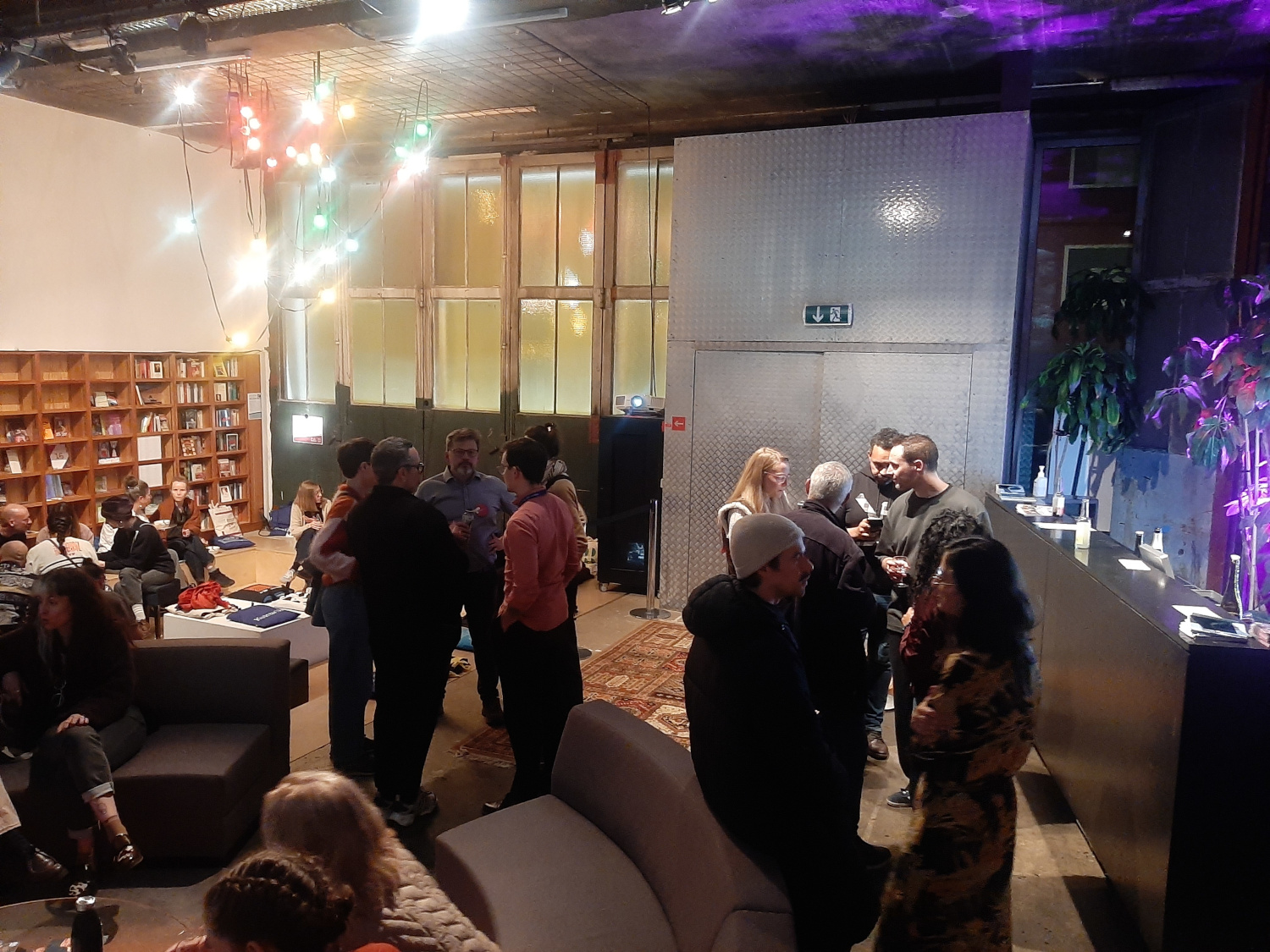
Return they can to a real hub, in fact. Almost hidden, behind central train station, in a small street, there’s Banannefabrik. Althoug that’s what a sign outside the place reads, the official name of Luxemburgs dance centre is Trois C-L (Centre de Création Chorégraphique Luxembourgeois). Since 2007 Bernard Baumgarten has been its artistic director. What he and his team managed to develope is nothing short of a real community, a space for artistic freedom. A couple of years ago the place gained the status „etablissement public“, ensuring institutional funding and thereby sustainable planning. And yet, even under the watchful eye of the government, artistic freedom is not to be debated. „We support new, contemporary aesthetics“, is one definite credo of Bernard’s. Production, professional development, cultural mediation and awareness raising: the promotion and distribution of dance at Trois C-L is manifold. What’s even more striking, as Valérie Quilez, International Director at Arts Council Luxemburg, puts it: „There’s no such thing in Luxemburg in the other arts.“

One representative of those aesthetics to support is the duet „Échos infinis“ by Alicia Cano Smit and Benoit Callens. Delivering dynamics of stunning focus, the two dancers collide at the beginning of their piece, coming together in a way that leaves room for questioning if they‘re drawn to each other or rather pushed. For 40 minutes they won’t „lose“ each other: Dark costumes with half sleeves reveal only their arms, the main parts to be connected to each other by, and invariably so. What might turn into something mannered quite easily, moves along in well balanced dramaturgy, enfolding a literal interconnectedness that feeds off the two dancers individual personality and their true relation. 

The quality of „Échos infinis“ may also come down to a certain degree to the outside eye of France based choreographer Yuval Pick. His actual input, however, as he himself puts it, has been nothing major. 

Just as much based on personality is the work of Syria born Saeed Hani. Time and again relying on creating images on stage that fuse both sensitivity and humane power, Hani has constantly been processing his personal background, his moving between very different cultural traditions, values and views. His current piece „Unveiling the Abstract“, which premiered earlier in November at Mierscher Theater in Mersch, turns out to be just as a continuation of this journey as expected. Turning traditionally patterned carpets into what might be read as doors or even walls, he tells a story of hiding and set boundaries, of freedom in a limited, secluded and yet safe space. By doing so he weaves into it aspects of religion, home and individual development. A wide horizon of cultural quotations to live by his is basis for offerings not neccessarily to decipher, depending on the audiences individual background. Answers, as he himself points out, is not what he’s driving at. Putting questions into the audience’s heads is what he prefers. This is why it might not come as a surprise to learn, that this needs a particular set of dancers to convey a matter so complex. Here the different cultural backgrounds they themselves bring along come in quite handy.

These are unequivocal representations of a sound self-confidence in a scene, that’s being backed up by the Arts Council, who set the stage every year for Performing Arts Focus Luxemburg. There’s also biennial Movement Art International Dance Festival (Luxemburg City, Mersch, Bertrange and Trier), taking place for its second time in October 2026. Saeed Hani has been the first edition’s Artistic Director.

One of the artists presented there in 2024 had been William Cardoso. Portugal born, he’s been associated with Luxemburg for quite some years now. His latest work, „Deadline“ takes the audience to some sort of haunted place, a limbo that houses three zombie-like creatures in rags that even cover their faces. Surrounded by the audience on all four sides, they wander about aimlessly like walking mummies. They circle a big black table centre stage that allows for associations somewhere between sacrificial altar and operating table. With Cardoso known for an approach to movement so physical it might almost be called violent, his three soulless non-beings start some sort of procedere, somewhat directed by a third party. They aim to „be“ by trying to belong, being together. Sometimes selfinflicted pain seems the only way to feel. Control over their own fate is not theirs, however. Repeatedly they adress the audience, taking off parts of their „garments“, carefully folding them and placing them into the hands of one of the spectators. 

The concept of disruption lies in the (dead) heart of Cordoso’s piece. Loss, ambivalence, and the art of letting go, it all blends into the vain attempt of trying to become. The three performers take off their „masks“, surprisingly „turning“ into individuals who might (or still might not) have a soul. They gather on top of the table, naked, almost desperately clinging to each other, trying not to fall off. In the end, it seems, one thing can’t be helped but recognized: There is nothing „above“, no one to turn to but oneself. 

There are many more different approaches of various artists, many of whom work internationally, connected to Uferstudios in Berlin or Les Hivernales in Avignon, for instance. One aspect of Luxemburg dance scene, however, is its youth. This is why despite the lack of a past the focus is on the future.

Kommentare

Noch keine Beiträge