„Careening Weave – A Dance of Five Fates“
EIn Fotoblog von Dieter Hartwig
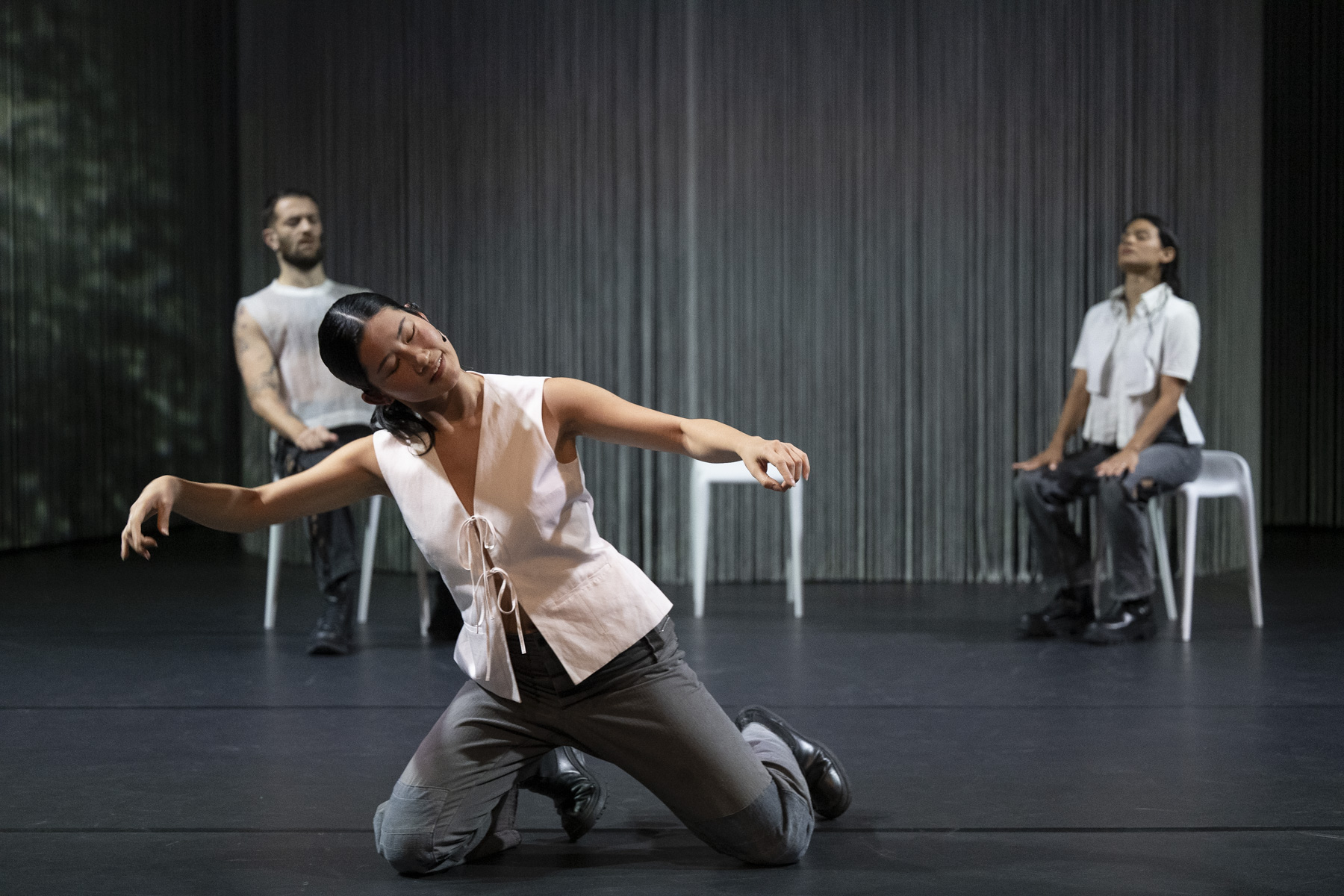
„What happened?“ An invisible, calm voice emerges in the theatre. Three dancers sit in three white chairs, having just greeted each other with playful yet quirky audio effects. One dancer responds: „When?“ Lights are turned off, this scene repeats three times. Same dialogue, subtly different physical movements. „What just happened?“ As the invisible voice further asks the audience, you realize this is about dismantling „narration“ itself.
Mexican artist Ixchel Mendoza Hernández‘s new work „A Scenario Of A System Off“ premiered at Radialsystem shortly before Christmas. Acknowledging the system cannot be truly shutdown, she invites the audience to imagine and simulate what a possible scenario could look like.
The stage design is minimalist: three white, string-cutted curtains hang in space, dividing the stage and serving as translucent background for projections. After the opening, three dancers sequentially recall „what happened then.“ The first uses specific names, the second uses pronouns like „she“ and „he“, the third employs relational terms like „friend“ and „colleague“, but the invisible voice immediately interrogates: „Who is she?“ „friend?“ This process reminds me of the AI prompting mechanism, where people adopt the personified communication strategy towards machine. In a scenario where any definition triggers the need for new definitions, how will human language system change?
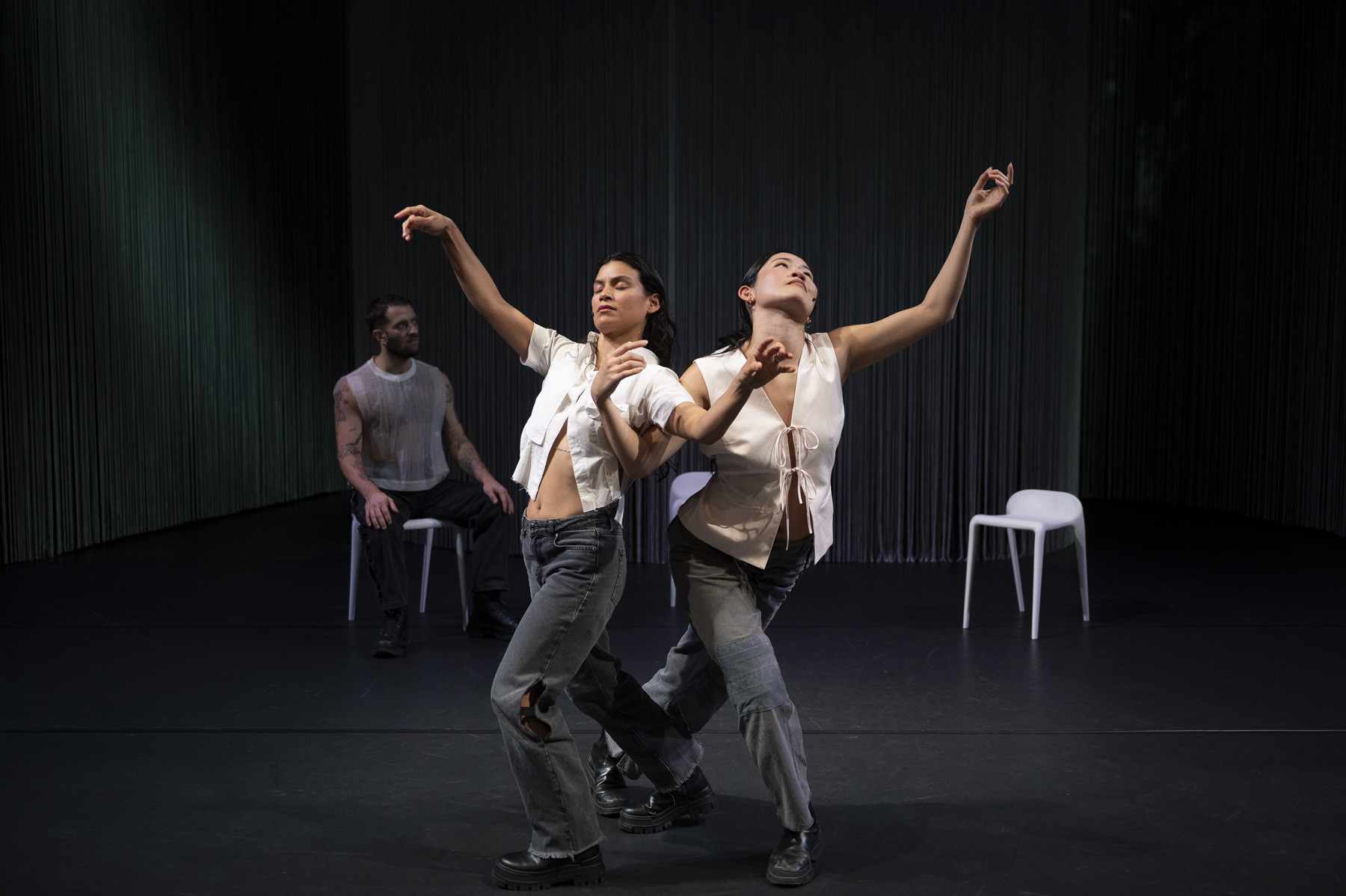
Chihiro starts to share her personal memories in a nostalgic way: feelings in the mother‘s womb. This is an unclassifiable area between memory and imagination. Is it possible to remember such feelings? Did it not happen in one‘s life? Neither of them is definitive. Images of nature such as texture of woods, supercoiled DNA float slowly in the background. With an inquisitive look, dancers unfold their emotions and thoughts through bodies. The intensity is accumulating with the shift of light, music and movement speed.
The outside voice keeps coming back. It becomes genderless and finally turns the question into a feeling of doubt in the space. Words and language gradually are losing its reassuring quality, but left with mechanical and desperate operations. As Ixchel falls back onto the floor, the body collapsing as if any systematic framework could suddenly dissolve.
The work creates fissures, but the audience‘s cognitive system immediately activates compensatory mechanisms, attempting to reorganize fragments into a logic chain. Three dancers together elongate the word „again“, the sound stretching, deforming, almost losing semantics. In that moment, the system seems to fail, yet I remain in the audience seat, still trying to understand, analyze, assign meaning. Does it remind us about the question that a complete system shutdown is impossible? As audience members, even those well trained in postmodern theatrical aesthetics, can we truly shut down the impulse to understand the work through logic?
Even in the theater, a space temporarily suspending everyday life, we still cannot escape the impulse to classify, name, and assign meaning. Using language to describe „language failure“ is itself a paradox. „What happened?“ This question repeatedly appears in the work, ultimately pointing not to any concrete event but to an epistemological inquiry. Memory is not tracing back facts but generated by recalling and reproducing them again and again.
„A Scenario Of A System Off“ von Ixchel Mendoza Hernández, Tanz: Ensemble
, © Dieter Hartwig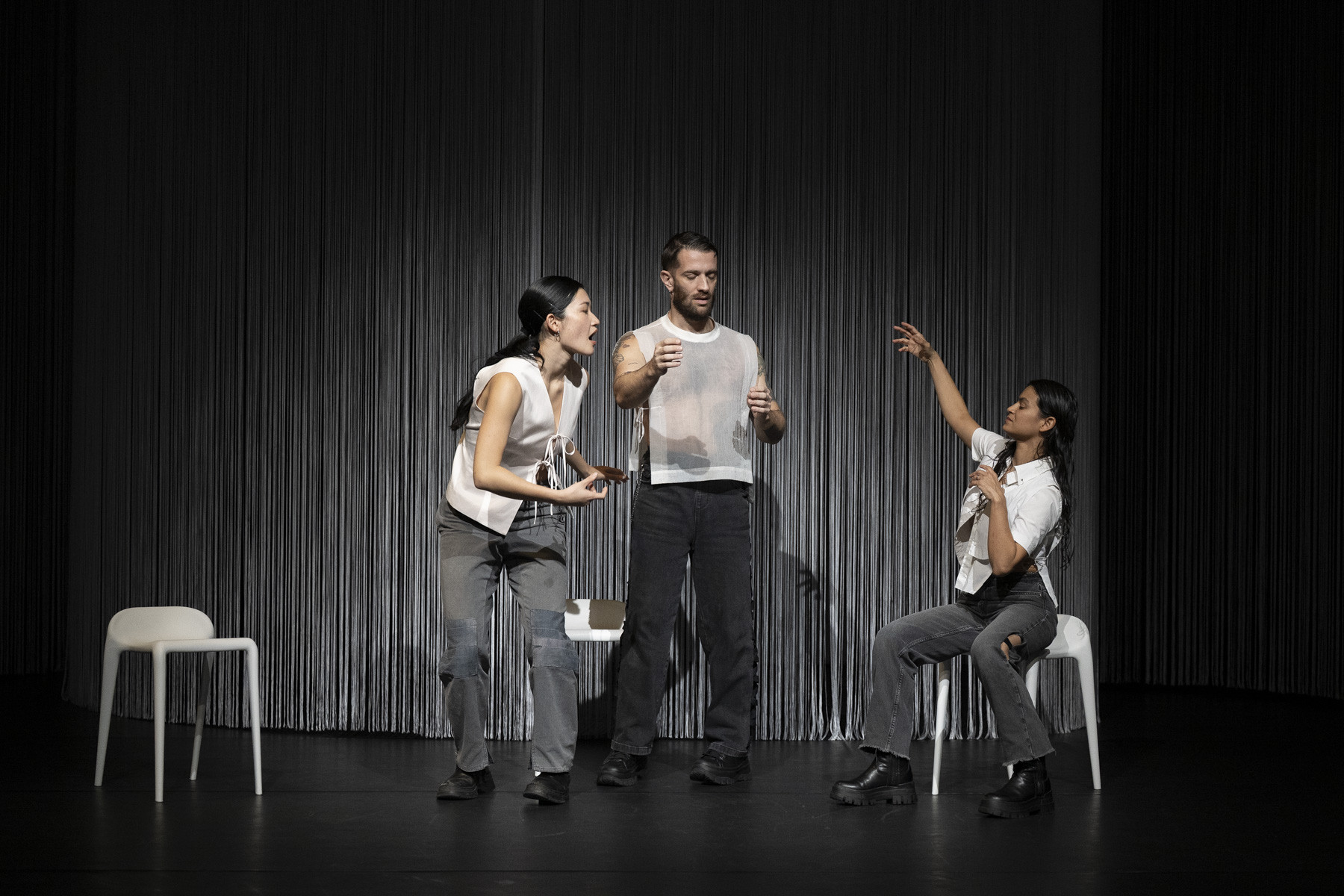
„A Scenario Of A System Off“ von Ixchel Mendoza Hernández, Tanz: Ensemble
, © Dieter Hartwig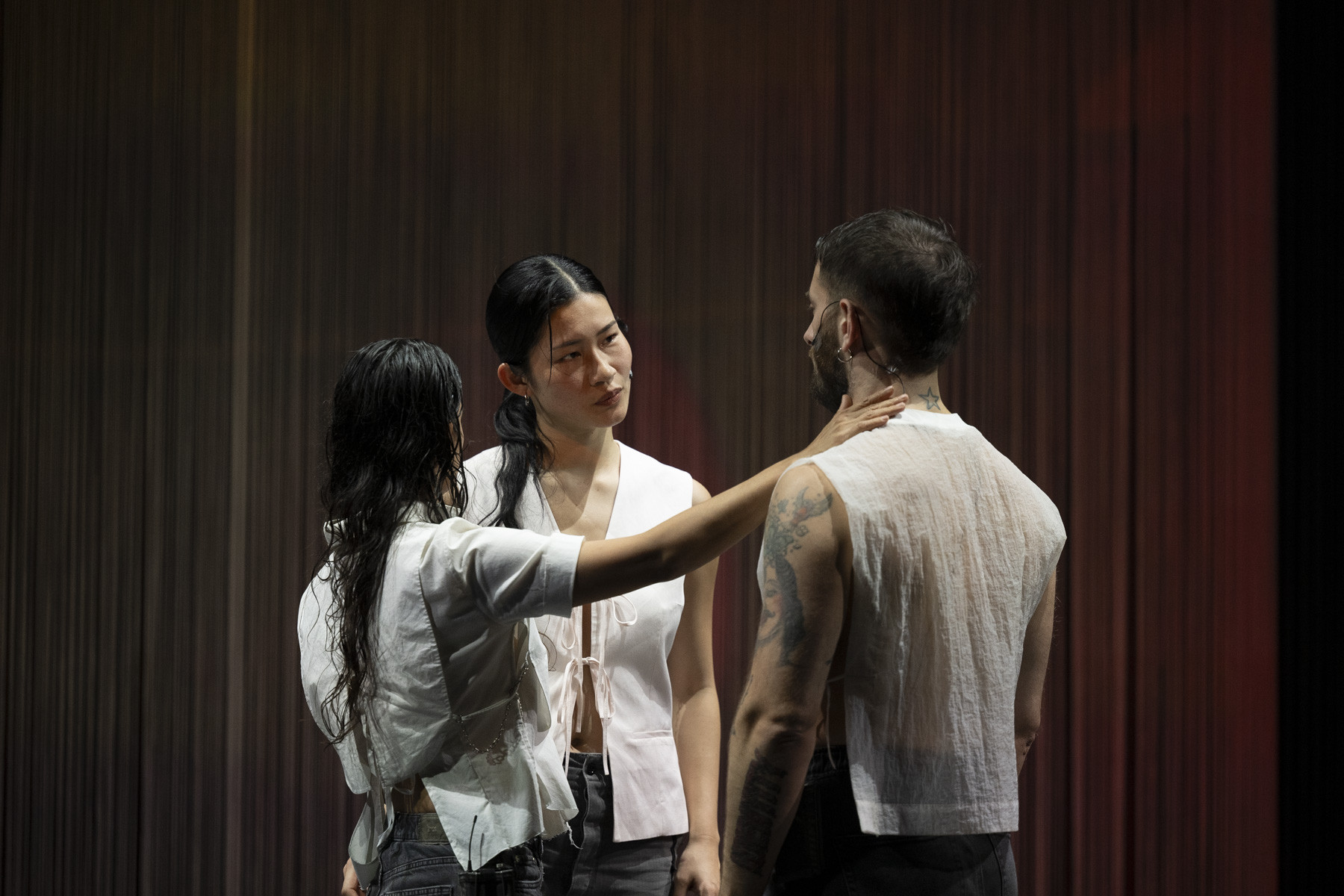
„A Scenario Of A System Off“ von Ixchel Mendoza Hernández, Tanz: Ensemble
, © Dieter Hartwig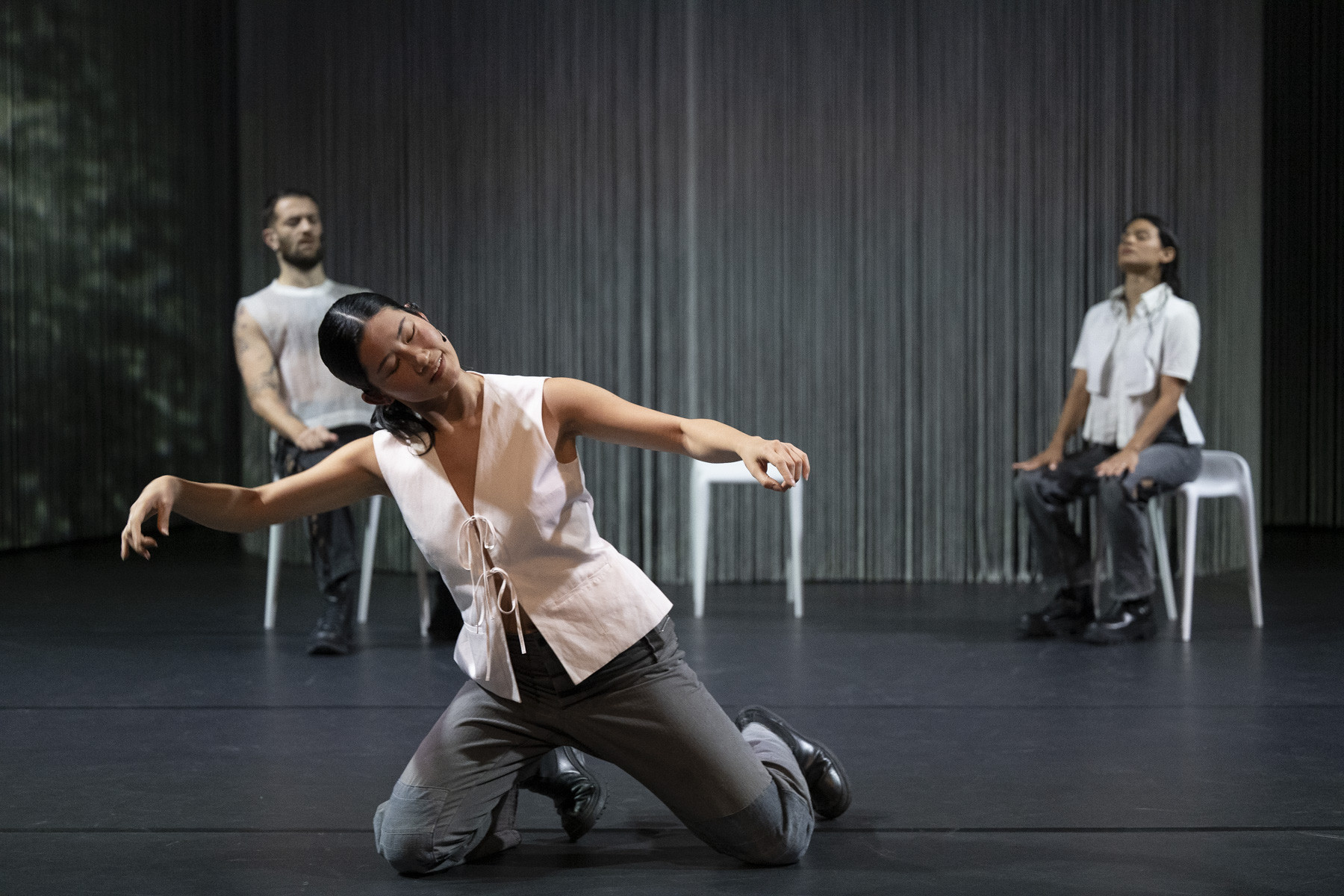
„A Scenario Of A System Off“ von Ixchel Mendoza Hernández, Tanz: Ensemble
, © Dieter Hartwig
„A Scenario Of A System Off“ von Ixchel Mendoza Hernández, Tanz: Ensemble
, © Dieter HartwigNoch keine Beiträge
basierend auf den Schlüsselwörtern
Bitte anmelden um Kommentare zu schreiben