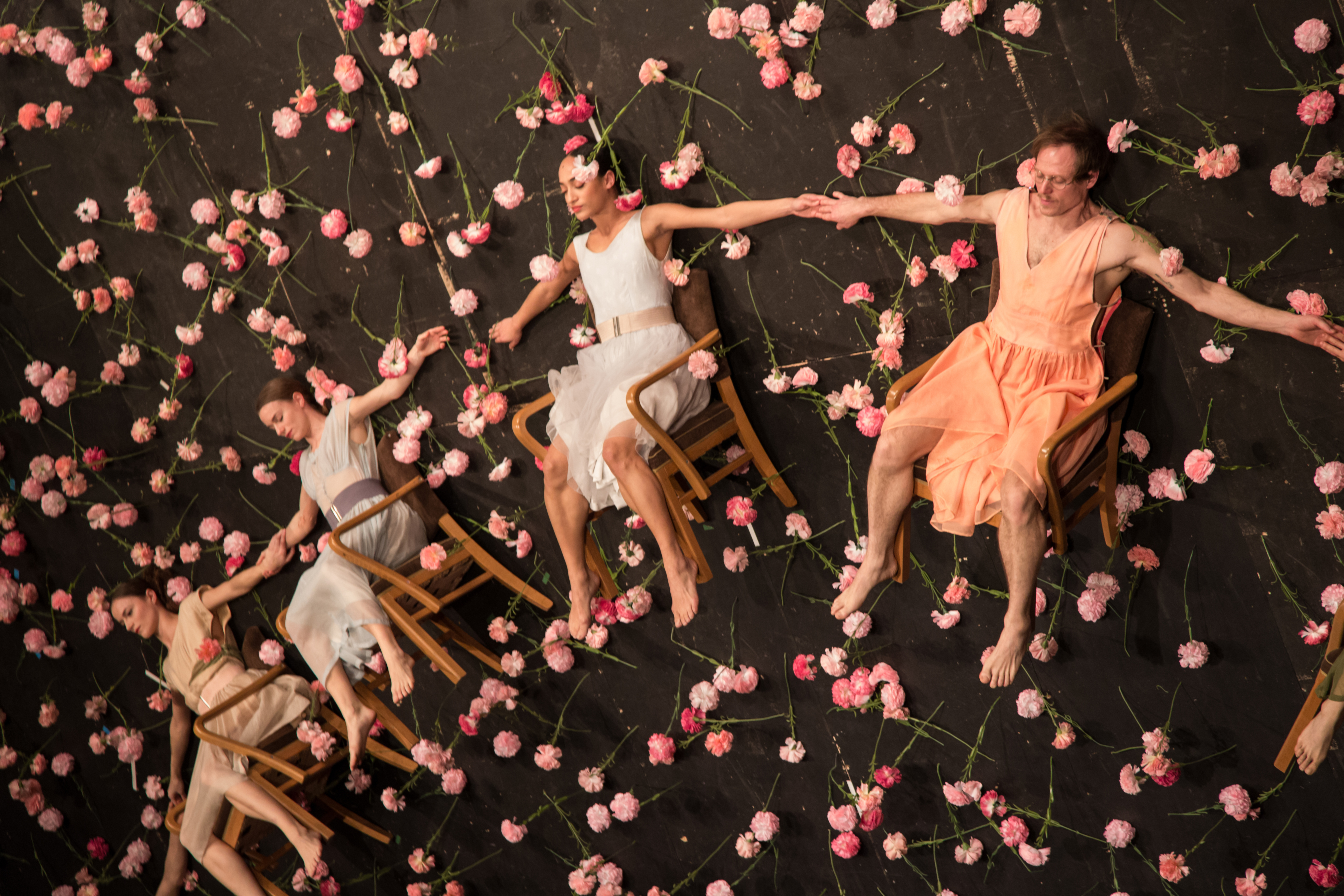

Pina Bausch hat Tanzgeschichte geschrieben. Sie begründete nicht nur die weltbekannte Compagnie in Wuppertal, sondern prägte ein ganzes Genre, das Tanztheater - und beeinflusste damit Künstler*innen, Choreografen*innen und Regisseur*innen in aller Welt, die sich auf sie und ihr Werk beziehen. Dafür erhielt die Choreografin viele Preise, den Deutschen Tanzpreis etwa, den Goldenen Löwen von Venedig und den Kyoto-Preis. Als Pina Bausch (1940-2009) 1973 nach Wuppertal kam, ahnte noch niemand, dass sie hier den modernen Tanz erneuern würde. Die junge Tänzerin und Choreografin übernahm die Ballettsparte und benannte sie um in „Tanztheater“. Denn das war ihr Ziel: Tanz und Theater miteinander zu verbinden.
Pina Bausch bereicherte den Tanz. Sie fügte Sprache, Schauspiel, Gesang und später Einflüsse aus der Kunst der ganzen Welt hinzu. Dadurch entwickelte sie eine neue Tanzsprache, die sie als Kulturbotschafterin in unzählige Länder trug und die überall verstanden wurde, da sie zeitlos ist und durchdrungen von einer tiefen Humanität. 46 Stücke hat Pina Bausch kreiert. Und auch mehrere Jahrzehnte nach ihrer Entstehung berühren sie, wühlen auf, treffen einen Nerv. Ein Großteil der Werke zählt zehn Jahre nach dem Tod der Gründerin zum Repertoire der Compagnie, die das Erbe pflegt und es mit großer Leidenschaft, Sorgfalt und Elan für kommende Generationen erhält.
Ihre Stücke erzählen häufig von ganz Alltäglichem. Der Mensch steht stets im Mittelpunkt, mit all seinen Hoffnungen, Zweifeln und Ängsten. Über Fragen an die Tänzer*innen näherte sich Pina Bausch ihren Themen. Wie Menschen Sprachlosigkeit, Ausbeutung, Erniedrigung und Abhängigkeit erleben, erzählte Pina Bausch häufig in Szenen komplexer Zweisamkeit von Mann und Frau.
Mit „Viktor“ (1986) begann die Zeit der Koproduktionen. Bis zu ihrem Tod arbeitete die Choreografin häufig mit Theatern und Institutionen in Frankreich, Italien, Spanien, Portugal, Türkei, Indien, USA, Argentinien, Hongkong, Japan und Korea zusammen und ließ sich von den fremden Ländern und Kulturen inspirieren.
Pina Bausch wrote dance history. She not only founded the world-famous company in Wuppertal, she shaped a whole genre – dance theatre – and influenced countless other artists, choreographers and directors worldwide who credit her and her work. For this she received a great many prizes, such as the German Dance Prize, Venice’s Golden Lion and the Kyoto Prize. When she first arrived in Wuppertal in 1973, no-one guessed she would reinvent modern dance there. The young dancer and choreographer (1940-2009) took over the ballet company at the Wuppertaler Bühnen (the combined municipal theatres) and soon renamed it the Tanztheater Wuppertal (‘Wuppertal dance theatre’), because that was her goal: to unite dance and theatre.
Pina Bausch enriched dance. She added speech, acting and singing to it, and influences from art-forms of the whole world later. In the process she created a new dance language which she took to countless countries as a cultural ambassador, a language understood everywhere, being timeless and steeped in a profound humanity. She made forty-six works, and even decades after their creation they move us, stir us, touch a nerve. Many of the works are still in the company’s repertoire, ten years after its founder’s death, and the company maintains and preserves this heritage with great devotion, care and energy.
Her pieces often describe very everyday matters. Human beings are always at the centre, with all their hopes, fears and uncertainties. Pina Bausch homed in on her themes by questioning the dancers. In scenes of complex intimacy between men and women she often showed how people experience speechlessness, exploitation, humiliation and addiction.
With Viktor (1986) the era of the co-productions began. Right up to her death Pina Bausch worked with theatres and institutions in France, Italy, Spain, Portugal, Turkey, India, the USA, Argentina, Hong Kong, Japan and Korea, gaining inspiration from these countries and cultures.