Das Junge Tanzhaus Berlin eröffnet
Deutschlands erster umfassender Veranstaltungsort für jungen Tanz verwandelt historisches Gebäude in Neukölln in Raum für Bewegung
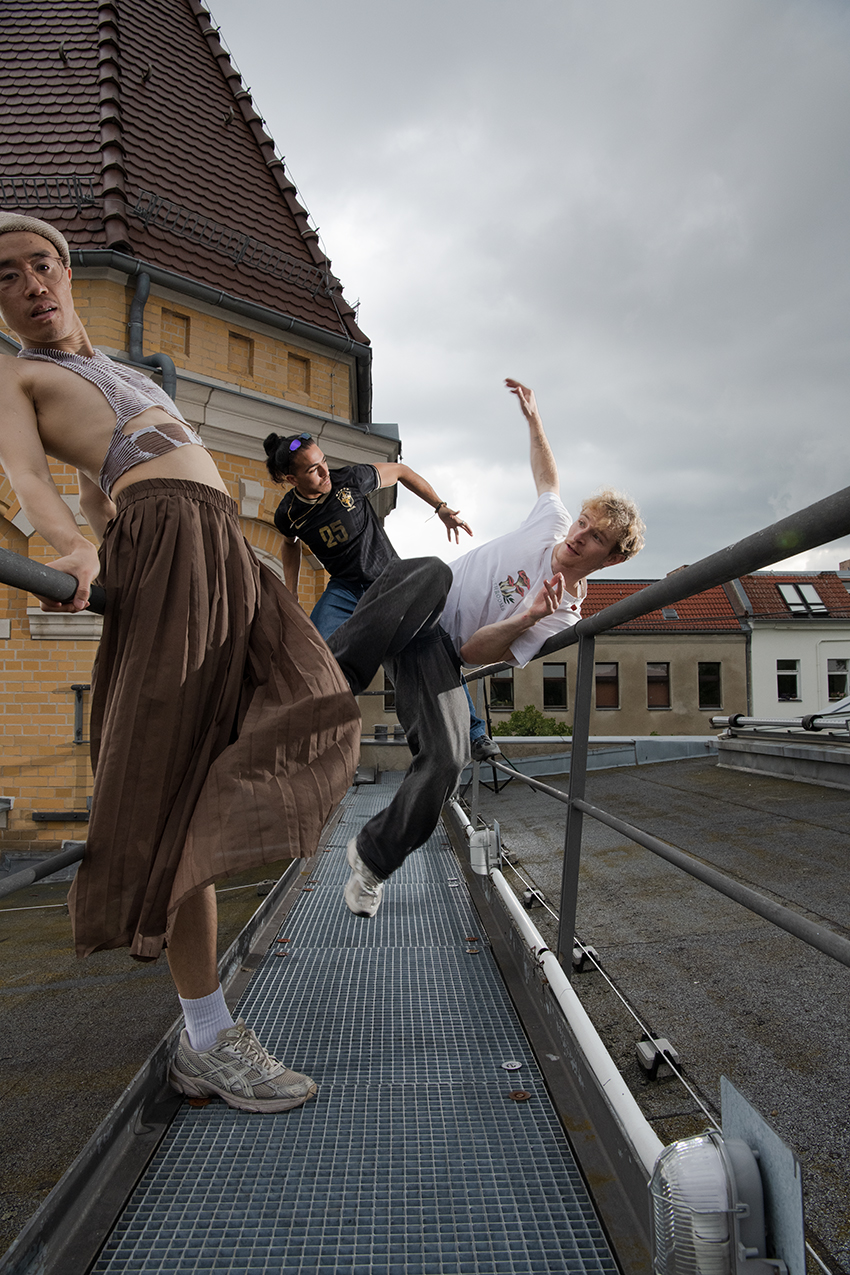
Germany‘s first comprehensive venue for young dance launches in Neukölln, transforming a historic building into a space for movement
New energy pulses through the dance studio at Lucy-Lameck-Straße 32 in Berlin-Neukölln. Choreographer and Krump World Champion Grichka Caruge leads a Krump workshop. The Los Angeles-born street dance style, known for its explosive power, fills the space as participants move from warm-ups through footwork, postures, gestures, and musicality to improvising their own combinations. This is the first weekend since Junges Tanzhaus Berlin opened, and the hallways are already lined with children's handmade artworks, marking the space as truly belonging to its young community.
The building itself carries layers of Berlin's history: once a brewery, later the intercultural arts space Oyoun, it now reopens as Junges Tanzhaus Berlin, Germany's first space to integrate dance education, presentation, and production specifically for young audiences under one roof. At its heart are diverse dance cultures such as Breaking, Krump, Raqs Sharqi, Tango, and contemporary dance, along with the young people who drive these cultures forward.
The venue operates across three pillars: a stage presenting professional dance for audiences aged 5 and up; a Campus offering professional qualifications for dancers in non-academic styles; and Community programs opening the space for classes, jam sessions, battles, and innovative formats like the Kiez-Tanz-Küche. The new venue integrates two decades of work from TanzZeit's existing programs, Tanz in Schulen and Tanzkomplizen, which have brought professional dancers into classrooms across Berlin. More importantly, house partner Future Move e.V. provides free consultation for young people interested in or already considering artistic careers, whether as dancers or in technical theater fields like lighting, sound, video, or stage construction, addressing the often intransparent pathways into professional arts.
In the evening, „A Human Race“, an internationally acclaimed and award-winning work that was also the first to bring Krump to the theatrical stage, took place. Five Krump dancers require little more than a circle of sand, fog, and Stravinsky‘s highly emotional „Le Sacre du Printemps“ to tell this story of self-empowerment. The piece spans the arc between the early 20th and 21st centuries: Krump serves as connection and resonance, this raw, energetic dance style that emerged on the streets of Los Angeles in the early 2000s as a response to racism and police violence, with Stravinsky‘s 1913 score, whose modern power remains inescapable today. The work depicts a fierce struggle for freedom, participation, and recognition, where dance becomes an expression of rage and resistance, but also of solidarity and community. At the end, on a stage disrupted by scattered sand, the dancers returns back along the circle, their gazes forming new alliances of support and understanding. A visual manifestation of the venue‘s own philosophy: creating spaces not just for but with young people.
For Livia Patrizi, founder of TanzZeit and now artistic director of Junges Tanzhaus Berlin, the opening fulfills a 20-year dream: „Junges Tanzhaus Berlin should be a stage for life, a home for all young people who don‘t just come once, as is usual in theater, but return again and again, until they shape the house themselves.“
Noch keine Beiträge
basierend auf den Schlüsselwörtern
Bitte anmelden um Kommentare zu schreiben